Many of us have taken the MBTI assessment and learned our behavioral preferences. Even so, we may still wonder: why do we keep reacting in the same old ways during conflicts or stressful moments, even when we know better?
Two people can act identically in one situation, yet be driven by completely different inner reasons. If you want to dig into why you think and act the way you do, the Enneagram is a powerful tool for self-exploration.
Unlike many personality tests that only describe outward behaviors, the Enneagram focuses on core motivations, deepest fears, and automatic responses under pressure. It answers the question “Why?” instead of simply putting a label on you.
If you hope to discover your true self, find the roots of relationship conflicts, and map out your personal growth journey, the Enneagram is a great starting point. Try the professional, free assessment at enneagram.org.cn. No registration is required.
1. The Enneagram: Not a Label, but a Map to Your Inner World
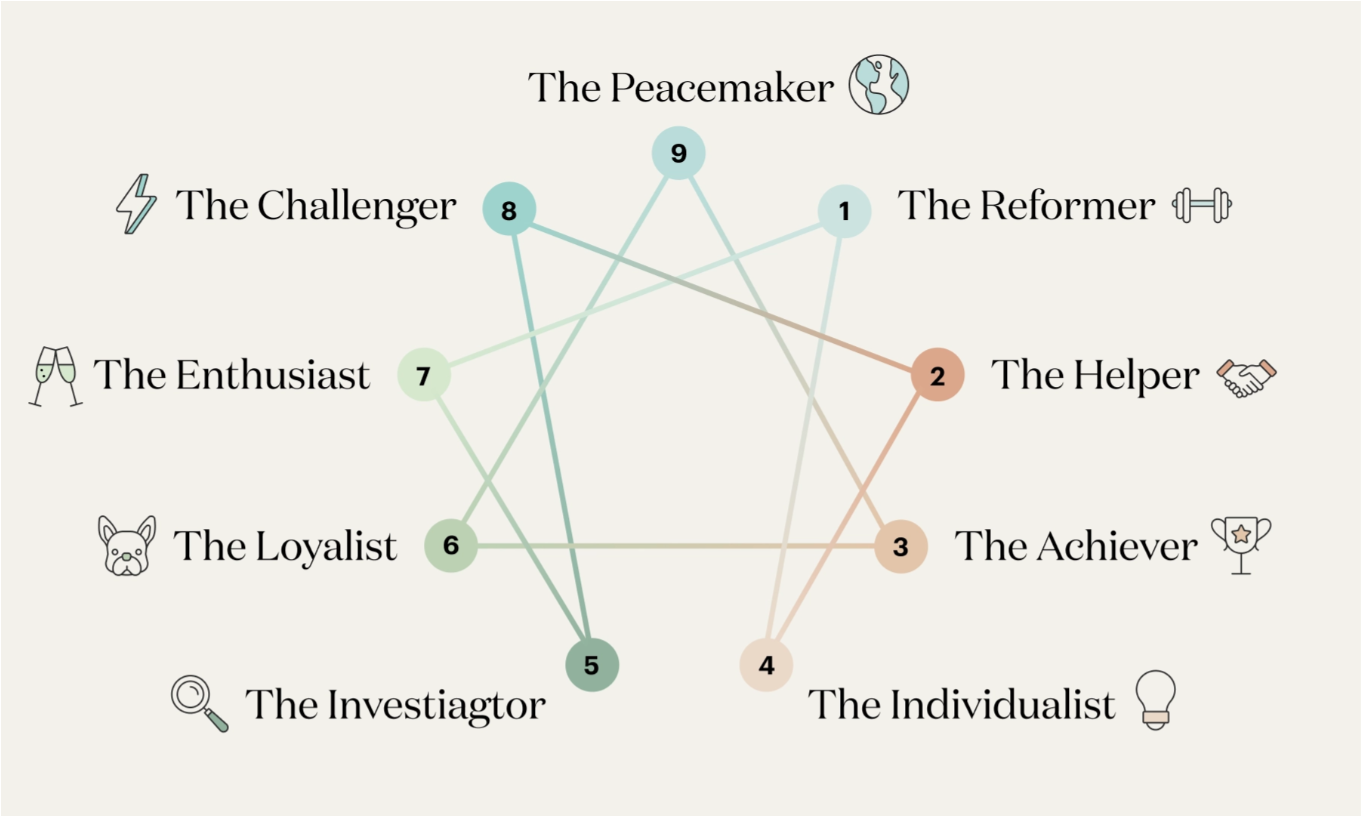
The Enneagram divides human inner drives into nine archetypes. Everyone carries traits from all nine types, yet one dominant type shapes your focus, emotional reactions, and life decisions.
Its value lies in four key areas:
- Core motivation: what you deeply crave, protect, or avoid.
- Automatic patterns: your instinctive reactions when stressed, confused, or confronted.
- Natural strengths: inborn gifts you can leverage consistently.
- Growth path: how to break free from habitual reactions and make conscious choices.
2. Quick Overview of the 9 Enneagram Types
Each Enneagram type has a distinct focus and inner desire:
- Type 1 · The Reformer: Principles & Improvement. Values rules, integrity, and correctness. Responsible and driven to improve things, with high standards for self and others.
- Type 2 · The Helper: Care & Connection. Sensitive to others’ emotional needs. Wants to feel needed, enjoys giving support, and prioritizes warm emotional bonds.
- Type 3 · The Achiever: Goals & Recognition. Action-oriented and adaptable. Seeks to prove worth through results and external validation.
- Type 4 · The Individualist: Authenticity & Uniqueness. Deeply attuned to feelings and meaning. Longs for genuine self-expression and meaningful experiences.
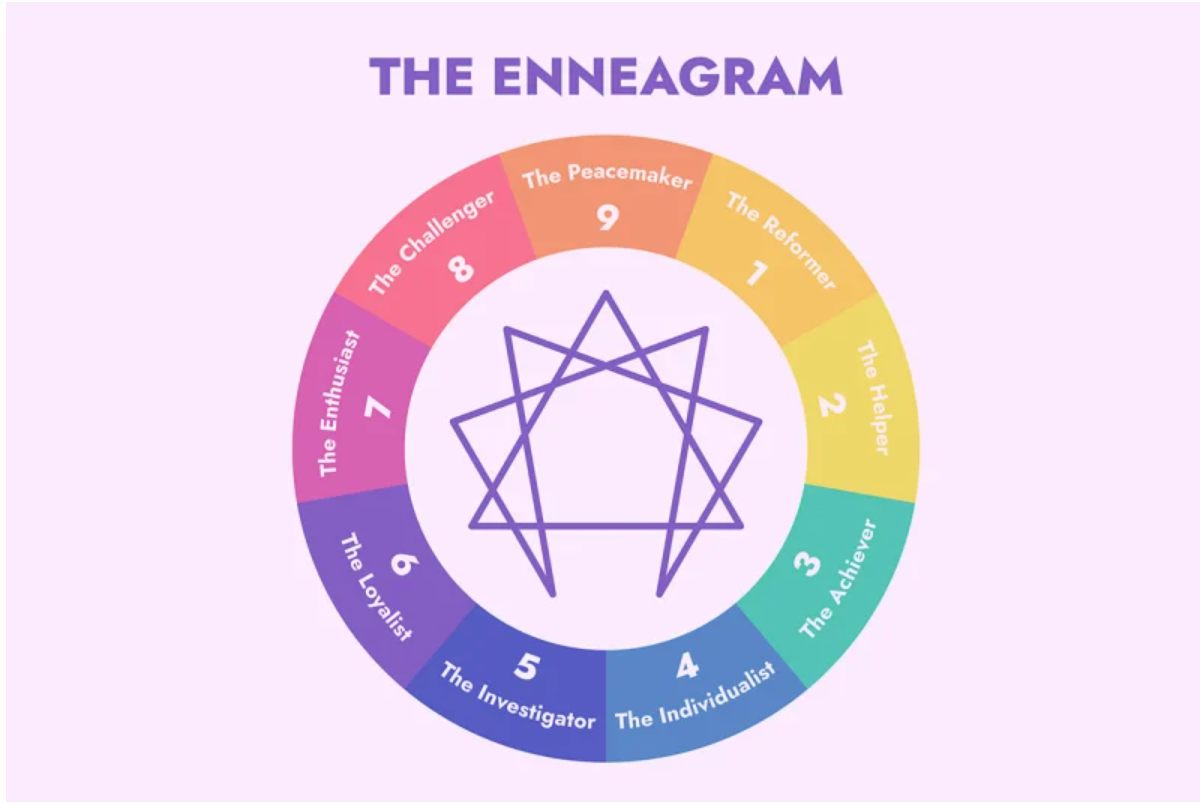
- Type 5 · The Investigator: Insight & Boundaries. Gains security through observation and knowledge. Values personal space, energy conservation, and clear boundaries.
- Type 6 · The Loyalist: Safety & Trust. Good at spotting risks and highly responsible. Looks for reliable support and security and tends to be cautious and practical.
- Type 7 · The Enthusiast: Possibilities & Experiences. Optimistic and curious. Pursues new adventures and options, while tending to avoid painful or restrictive feelings.
- Type 8 · The Challenger: Strength & Autonomy. Direct and decisive. Protects loved ones, defends boundaries, and resists being controlled.
- Type 9 · The Peacemaker: Harmony & Acceptance. Easygoing and inclusive. Skilled at easing conflict, but may overlook personal needs to preserve peace.
Descriptions alone can make similar types easy to confuse. Take the assessment at enneagram.org.cn to explore your dominant type, strengths, blind spots, relationship dynamics, and practical growth guidance.
3. Enneagram vs. MBTI: What Is the Difference?
The Enneagram and MBTI complement each other, yet they view human beings from different angles.
| Comparison | MBTI | Enneagram |
|---|---|---|
| Core focus | How you act: cognitive preferences for taking in information and making decisions | Why you act: underlying motives, fears, and desires |
| Results | 16 cognitive personality types | 9 inner-motivation archetypes |
| Best for | Understanding communication styles and teamwork | Uncovering subconscious patterns for self-growth |
For example, two people may both prefer structure and accuracy and share the same MBTI type. From the Enneagram perspective, one may be a Type 1 afraid of mistakes, while the other is a Type 6 afraid of uncertainty. Their inner drives are entirely different.
You can use both tools together: MBTI shows your habits; the Enneagram reveals what drives those habits.
4. How Can the Enneagram Help You?
Know Yourself More Deeply
Many struggles come from repeating the same mental loops. Why do you overthink? Why do you escape under pressure? Why do you constantly seek approval? The Enneagram separates your actions from your motivations so you can recognize recurring worries and true needs.
Improve Romantic and Workplace Communication
Most misunderstandings happen because people operate from different core needs. A Helper (Type 2) shows care through service; an Investigator (Type 5) shows respect through space. Understanding these motives can reduce unnecessary arguments and build tolerance.
Find Your Personal Growth Direction
The Enneagram does not lock you into a fixed identity. It reveals the gifts of your natural instinct alongside its blind spots. Growth does not mean rejecting who you are; it means noticing your autopilot responses and choosing differently.
5. Tips to Get an Accurate Enneagram Result
Short, scattered online quizzes can produce unreliable outcomes. Follow these rules for a more useful result:
- Answer honestly based on who you truly are, not the ideal version of yourself.
- Go with your first instinct instead of overanalyzing each question.
- Review the full report. Do not only remember your number; read the core fears and motivations and consider whether they match your life experience.
We recommend enneagram.org.cn, a free dedicated Enneagram site. No sign-up is required. Answer the questionnaire intuitively and receive a complete assessment report covering strengths, conflict patterns, and actionable growth advice.
FAQ
Will my Enneagram type stay the same forever?
Your core underlying motivation remains fairly consistent, but your maturity and behaviors change with life experience. The Enneagram exists for awareness, not permanent labeling. It helps you respond more flexibly.
My test result does not feel like me. What should I do?
Check your second-highest score in the report. Many people carry strong traits of two types. Focus on motive descriptions rather than surface adjectives.
Can employers or therapists use the Enneagram for hiring or diagnosis?
No. The Enneagram is a self-development tool. It should not be used for recruitment screening or mental health diagnosis. If you are struggling mentally, reach out to a licensed counselor.
Final Words
True transformation begins when you see your automatic patterns. Personality assessments are not about sticking a label on yourself; they are mirrors for inward exploration.
Take the free Enneagram test and understand your inner world →